Every morning, millions of people around the world experience a peculiar phenomenon: they wake up feeling anxious, depressed, or emotionally heavy, only to find their mood completely normalize within a few hours. This isn't simply "being a night owl" or needing coffee to function—it's a well-documented clinical pattern that reveals fascinating insights into how our brains transition between different states of consciousness.
The Science Behind Morning Mood Struggles
What appears to be a simple case of "waking up on the wrong side of the bed" is actually a complex neurobiological process gone awry. During sleep, our brains cycle through distinct phases, each orchestrated by different neurochemicals. When we transition from REM sleep (characterized by high acetylcholine and vivid dreams) to wakefulness (dominated by norepinephrine, dopamine, and serotonin for alertness and mood regulation), multiple brain systems must coordinate perfectly.
Sometimes, this transition isn't seamless. Parts of the brain may remain in a "sleep-like" mode after awakening, creating what researchers describe as an extended form of sleep inertia—but with a pronounced emotional component.
Understanding Diurnal Mood Variation
Clinically, this pattern is known as Diurnal Mood Variation (DMV) or "morning depression." It's characterized by:
- Intense depressive, anxious, or gloomy feelings upon waking
- Gradual improvement throughout the morning or early afternoon
- Return to normal mood and functioning later in the day
- No significant mood issues during evening hours
Studies indicate that 40-60% of individuals with major depressive disorder experience some form of DMV. The large-scale STAR*D study, involving over 2,800 participants, found that about 42% reported diurnal mood patterns, with early-morning symptoms correlating with more severe overall depression.
The Neural Orchestra Out of Sync
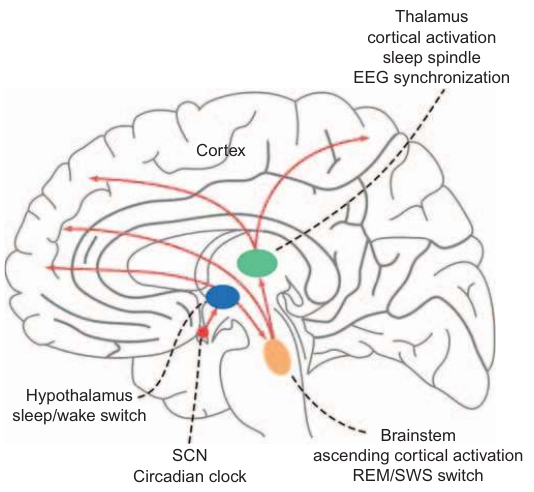
To understand why this happens, imagine the brain as a complex orchestra with multiple sections:
- The Amygdala (Percussion Section): Processes threat and negative emotions, highly active during REM sleep
- The Prefrontal Cortex (Conductor): Provides rational control and emotional regulation, slower to activate upon waking
- The Hypothalamus (Metronome): Houses the circadian clock that coordinates daily rhythms
In healthy sleep-wake transitions, this orchestra plays in perfect harmony. However, when the transition is imperfect:
- The amygdala may still be "running hot" from REM sleep's emotional processing
- The prefrontal cortex remains groggy and unable to provide its usual regulatory control
- Cortisol spikes excessively, amplifying negative emotions
- The circadian clock fails to properly synchronize all brain regions
The result is a temporary state where negative emotions dominate until the brain's chemistry fully stabilizes—typically within 2-4 hours.
Common Underlying Causes
Several factors can contribute to this morning mood dysregulation:
| Cause Category | Details |
|---|---|
| Sleep Disorders |
Sleep apnea: Repeated oxygen drops during sleep create morning stress and mood disruption Delayed sleep phase disorder: The internal clock is misaligned, forcing awakening during deep sleep phases Poor sleep architecture: Fragmented sleep or excessive REM can leave emotional residue |
| Circadian Rhythm Disruption |
Cortisol awakening response malfunction: The normal morning cortisol surge becomes exaggerated or poorly timed Neurotransmitter timing issues: Serotonin and dopamine systems fail to activate properly upon waking Light exposure problems: Insufficient morning light exposure prevents proper circadian synchronization |
| Mood Disorders |
Major depressive disorder with melancholic features: Morning depression is a classic diagnostic criterion Seasonal affective disorder: Particularly common during months with limited daylight Anxiety disorders: The quiet mind upon waking immediately fixates on worries without external distractions |
Professional Evaluation
The first step should always be a comprehensive medical assessment:
- Primary care screening: Blood tests to rule out thyroid issues, vitamin deficiencies, or hormonal imbalances
- Sleep study: Polysomnography can identify sleep disorders like apnea or architectural abnormalities
- Psychiatric evaluation: Assessment for underlying mood or anxiety disorders using validated scales
Lifestyle Interventions
Circadian Rhythm Regulation:
- Immediate bright light exposure upon waking (10,000-lux therapy lamp for 30 minutes)
- Consistent sleep-wake times, even on weekends
- Natural sunlight exposure throughout the day
Sleep Hygiene Optimization:
- 7-9 hours of sleep nightly
- No screens 1 hour before bedtime
- Cool, dark sleeping environment
- Avoid alcohol and caffeine late in the day
Morning Routine Structure:
- Get out of bed immediately upon waking to prevent rumination
- Gentle physical activity or stretching
- Protein-rich breakfast to stabilize blood sugar
- Mindfulness practices to ease the transition between brain states
Medical Treatments
For Depression/Anxiety:
- SSRIs or SNRIs to balance neurotransmitter systems
- Cognitive Behavioral Therapy (CBT) to address negative thought patterns
- Chronotherapy to realign circadian rhythms
For Sleep Disorders:
- CPAP therapy for sleep apnea
- Melatonin supplementation for circadian misalignment
- Sleep medications when appropriate
Advanced Options:
- Light therapy (effective in 50-80% of cases with circadian components)
- Transcranial magnetic stimulation (TMS) for treatment-resistant cases